
by: Rev. Anna Golladay
In case you haven’t heard, I recently launched my campaign for the United States Congress. Even weeks later, typing those words feels out-of-body for me. When I decided to run for public office, I expected long evenings, complex policy conversations, and the vulnerability that comes with putting your name before your community. What I didn’t expect was how much campaigning would illuminate the very work I’ve been immersed in through Convergence and the life of congregations.
At first glance, a political campaign and a congregational church might seem like very different institutions. One operates in the civic sphere, the other in the spiritual. One asks for votes, the other for discipleship. But the deeper I go into this campaign, the more I see how similar they are in structure, posture, and purpose. Both are rooted in people. Both exist within neighborhoods. And both depend on three essential commitments: shared leadership, deep listening, and authentic community.
1. None of Us Does This Alone
One of the first lessons of campaigning is that the candidate is never the whole campaign. While a single name appears on the ballot, the effort behind that name is collective. A campaign manager helps set direction and maintain focus. A field director builds systems for outreach and volunteer coordination. Policy advisors, communications strategists, data analysts, and volunteer leaders all contribute their expertise. They often know more than the candidate in their particular domains — and that’s not a liability; it’s a strength.
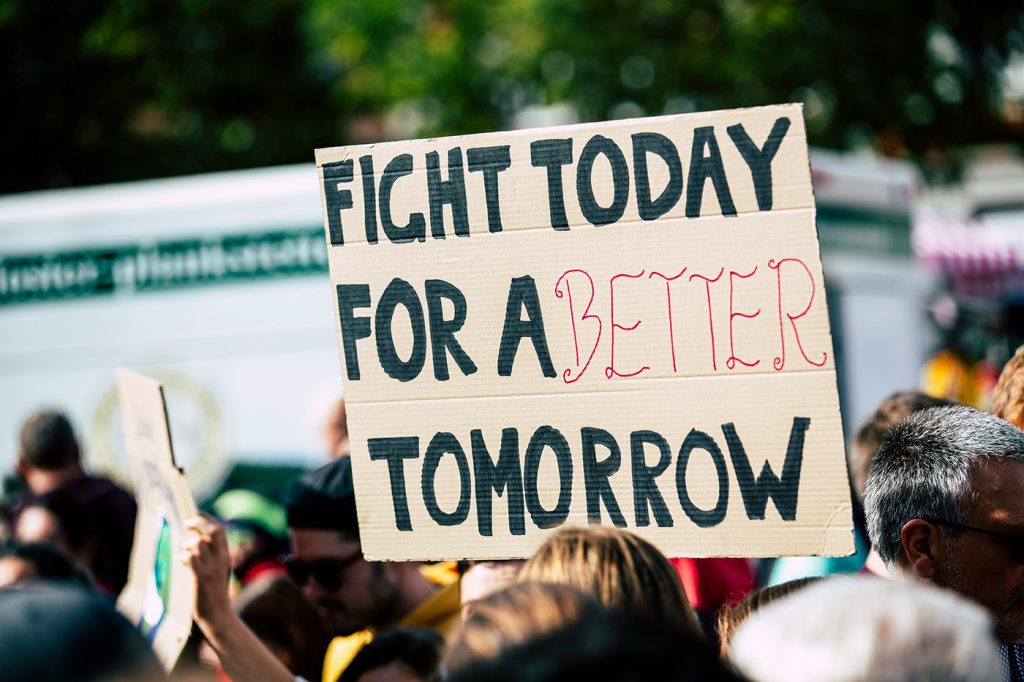
Strong campaigns are built on humility. They require a candidate willing to say, “I don’t have all the answers. I need people around me who see what I can’t see.”
Congregational life is no different. Through Convergence, we’ve seen again and again that thriving congregations are not led by solitary heroes. They are supported by wise coaches, consultants, and those adept in planning for the future who help them navigate transitions, discern vision, and face difficult realities. Whether it’s a pastoral transition, a conflict that needs mediation, or a season of strategic planning, outside guidance often provides clarity that insiders struggle to find.
There’s something deeply faithful about that kind of collaboration. It acknowledges that leadership is not about control; it’s about stewardship. It recognizes that the health of a congregation — like the health of a campaign — matters too much to rely on instinct alone.
In both arenas, inviting others into the work creates resilience. It diffuses blind spots. It fosters accountability. And it reminds everyone involved that leadership is a shared endeavor, not a solitary performance.
2. Listening to What the Neighborhood Is Saying — Spoken and Unspoken
If shared leadership builds strength, listening builds legitimacy.
Campaigning quickly teaches you that policy platforms and prepared remarks are only part of the work. The most meaningful moments often happen on doorsteps, in living rooms, at farmers’ markets, or in community forums. People tell you what concerns them: rising costs, public safety, school funding, infrastructure, and healthcare. But they also communicate something deeper — their fatigue, their skepticism, their longing to be heard.
And sometimes what you don’t hear is just as revealing. The silence from certain neighborhoods. The absence of young families at public meetings. The disengagement of long-time residents who no longer believe their voice matters. Listening requires paying attention not only to words, but to patterns — who shows up, who doesn’t, and why.
Our congregations face a similar calling. Churches are not meant to exist in isolation from our surrounding communities. Yet it’s easy for congregational life to turn inward — focusing on internal programs and traditions while missing the shifting realities outside our walls.
Healthy congregations ask hard questions: Who lives in our neighborhood now? How has the demographic landscape changed? What economic pressures are families experiencing? Where is there loneliness? Where is there injustice? Where are people finding belonging — and where are they not?
Through Convergence’s work, we’ve seen how powerful it can be when congregations intentionally listen before acting. Listening sessions. Community partnerships. Data-informed assessments. Honest conversations about decline or disconnection. Listening creates space for humility. It interrupts assumptions. It opens the possibility that the Spirit may already be at work in places we haven’t yet noticed.
Both a campaign and a congregation lose credibility when they presume they already know what people need. Listening is not a strategy to win approval; it is an act of respect. It communicates that people’s lived experiences matter.
And perhaps most importantly, listening changes the listener. It softens certainty. It expands compassion. It reshapes priorities.
3. We Are Sustained by Community
Finally, both campaigns and congregations are sustained by community — not abstractly, but tangibly.
A campaign cannot function without volunteers who knock doors, make phone calls, host gatherings, manage logistics, and show up consistently. Momentum is built not through a single speech, but through hundreds of small acts of shared effort. When people begin to see the campaign as “ours” rather than “mine,” something shifts. Energy multiplies. Ownership deepens. Hope spreads.
Congregational life works the same way. A church is not simply a building or a weekly service; it is a network of relationships. It is people praying for one another, serving together, studying together, grieving together, celebrating together. Ministry is not sustained by programs alone — it is sustained by connection.
That is why spaces like Convergence’s community app, The Commons, matter. Leaders need places to share ideas, ask questions, process challenges, and remember they are not alone in their work. Isolation drains energy. Community restores it.
Running for office has made this truth even clearer to me: meaningful work cannot be carried alone. Whether we are building a campaign or cultivating a congregation, we are sustained by encouragement, accountability, shared wisdom, and collective purpose.
In both spaces, when we embrace collaboration, practice deep listening, and invest in community, we are doing more than accomplishing tasks. We are modeling a different way of being — one rooted in humility, attentiveness, and shared hope for the neighborhoods we serve.
And in a time when many institutions feel fragile or fractured, that kind of shared work may be the most important calling of all.