
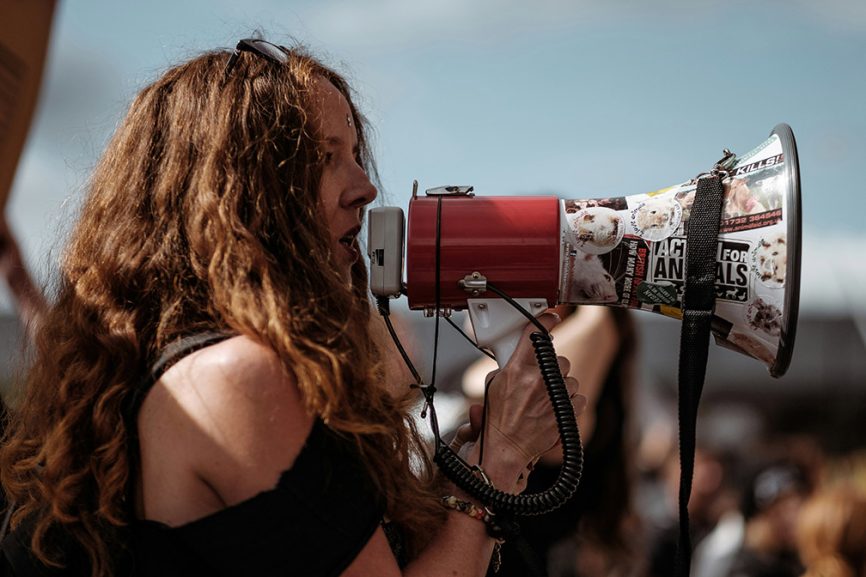
This weekend, across cities and small towns, people will gather for what are being called the “No Kings” protests—public acts of resistance against concentrated power, creeping authoritarianism, and the normalization of injustice. There will be signs and chants, music and movement, a collective refusal to accept that things must remain as they are.
For those of us shaped by the Christian story—especially those of us in progressive communities—this moment may feel familiar. Not just politically, but liturgically. Not just as protest, but as procession.
Because we have seen something like this before. We call it Palm Sunday.
A Parade That Wasn’t What It Seemed
Palm Sunday is often softened in our retellings. Children wave branches. Congregations sing “Hosanna.” The scene can feel quaint, even sentimental. But in its original context, it was anything but.
Jesus enters Jerusalem not quietly, not privately, but in a deliberate public demonstration. He rides a donkey—a symbol loaded with meaning—while crowds gather, shouting political-religious slogans: “Hosanna!” (Save us!) and “Blessed is the one who comes in the name of the Lord!”
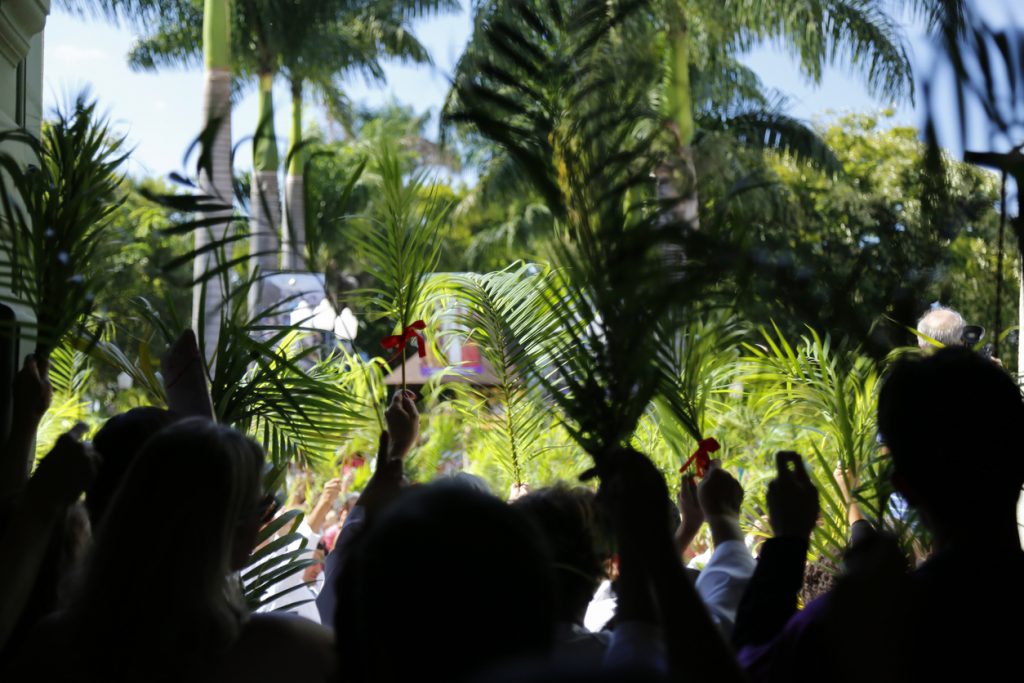
This was not random enthusiasm. It was organized disruption.
Scholars remind us that at the same time, on the other side of the city, the Roman governor Pontius Pilate would have been entering Jerusalem as well—mounted on a war horse, flanked by soldiers, a show of imperial power designed to keep the peace through intimidation.
Two processions. Two visions of power. One rooted in domination. One rooted in solidarity.
Palm Sunday, then, is not just a prelude to Easter. It is a protest parade. A public, embodied critique of empire. A declaration that another kind of reign—a reign of justice, mercy, and collective flourishing—is not only possible, but already breaking in.
No Kings, No Caesars
When we look at the “No Kings” protests through this lens, the resonance becomes unmistakable.
To say “No Kings” is not simply to reject a person or a political figure. It is to reject a system that concentrates power in ways that dehumanize and diminish. It is to say: we refuse to be governed by fear, by hierarchy that crushes, by narratives that tell us we are powerless.
It is, in its own way, a modern echo of *“We have no king but God”—*a phrase that, in the time of Jesus, carried its own complicated and subversive weight.
But here’s where the parallel deepens: Jesus doesn’t replace one king with another in the way the world expects. He reframes power altogether. His “kingship” is revealed not in domination, but in service. Not in coercion, but in community. Not in violence, but in self-giving love.
So when people take to the streets this weekend—marching, chanting, refusing—they are participating in a long tradition of embodied dissent. A tradition that, for Christians, is not peripheral to faith, but central to it.
Palm Sunday reminds us: faith has always had a public dimension. It has always involved risk. It has always meant, at times, stepping out of line.
The Courage to Disrupt
But here’s the uncomfortable truth: it is easier to remember Palm Sunday than to reenact it.
It is easier to wave palms in a sanctuary than to raise a sign in the street.
Easier to sing “Hosanna” than to risk being misunderstood.
Easier to honor a past disruption than to participate in a present one.
Many congregations feel this tension deeply. They sense the call to justice, to prophetic witness, to something more than maintenance—but they are unsure how to move from intention to action. They worry about conflict, about sustainability, about what it might cost.
And yet, the Gospel consistently invites communities not just to believe differently, but to live differently. To organize differently. To imagine differently.
To buck the status quo.
From Inspiration to Implementation
This is where the work becomes both spiritual and practical. If Palm Sunday is a model of public witness, then the question for today’s congregations is not just What do we believe? but How do we embody those beliefs in ways that matter?
How do we move from symbolic gestures to sustained impact?
How do we align our structures with our values?
How do we cultivate courage—not just individually, but collectively?
These are not easy questions. And they are not questions congregations should have to answer alone.
That’s where our consulting work comes in.
We partner with progressive faith communities who are ready to move beyond maintenance mode and into meaningful, justice-centered action. Together, we help congregations:
- Clarify their identity and values in a rapidly changing cultural landscape
- Develop strategies for community engagement that are both bold and sustainable
- Navigate internal resistance and build shared commitment
- Reimagine leadership models that reflect collaboration rather than hierarchy
- Create pathways for members to engage in real-world change, not just Sunday morning participation
In other words, we help communities do what Palm Sunday points toward: not just proclaim a different kind of world, but practice it.
Bucking the Status Quo—Faithfully
To “buck the status quo” is not, for progressive Christians, about being contrarian for its own sake. It is about faithfulness. It is about asking, again and again: Where is power being abused? Who is being left out? What stories are we being told that keep us small, silent, or complicit?
And then—crucially—it is about responding together. This kind of work requires more than passion. It requires structure, strategy, and support. It requires communities willing to experiment, to fail, to learn, and to try again. It requires, in many ways, becoming the kind of community that could organize a Palm Sunday procession today.
Joining the Procession
So as the “No Kings” protests unfold this weekend, perhaps we might see them not only as political events, but as invitations.
Invitations to remember that our faith has always had something to say about power.
Invitations to recognize that public witness is part of our spiritual DNA.
Invitations to step, however cautiously, into the work of transformation.
And perhaps, too, they are invitations to our congregations.
To move from admiration to participatio and from reflection to action. From safe tradition to living, breathing, risk-taking faith. Because the truth is, the procession is still happening. The question is not whether it exists. The question is whether we will join it—and how.
If your congregation is ready to explore what that might look like, we would be honored to walk alongside you. Together, we can discern what it means to be a community that doesn’t just remember Palm Sunday, but lives it.
Hosanna—save us—is not just a cry from the past. It is a call to the present. And it is ours to answer.
Comments
palmsunday2026.com
See what is happening on Palm Sunday!