

What you should know about attendance patterns in small congregations
by: Rev. Dr. Anna Hall
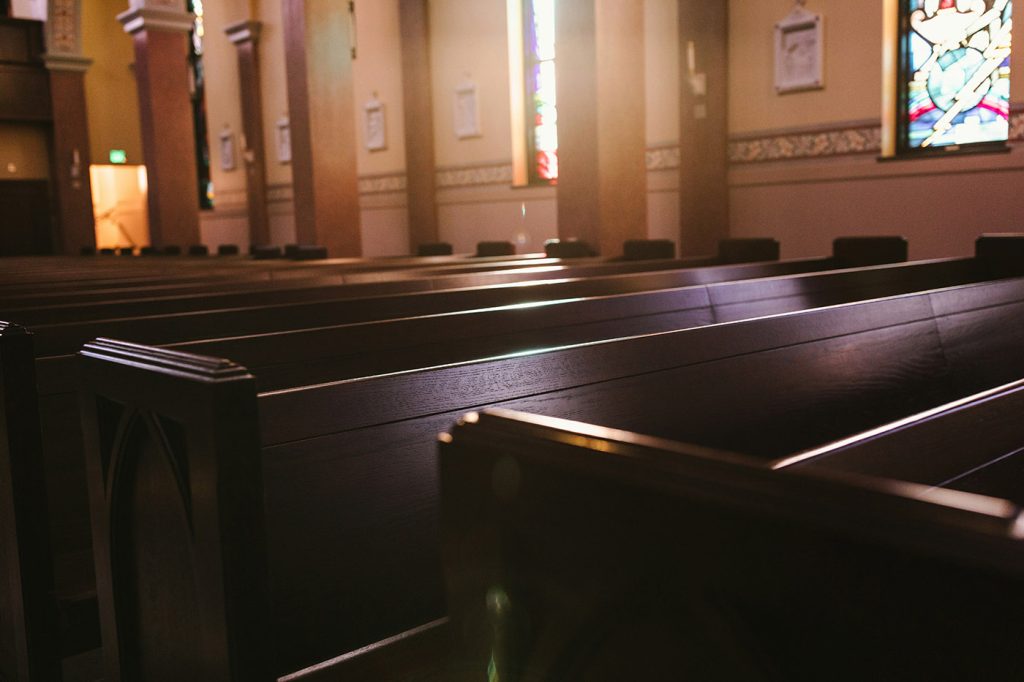
Do your pews look empty? If you are worshiping in a sanctuary built for hundreds, they likely do. According to the latest research from Faith Communities Today and Exploring the Pandemic Impact on Congregations, the median in-person attendance in Mainline Protestant congregations is now 50 people. While some traditions are seeing an upward trend in attendance, Mainline Protestant churches continue to shrink. Congregations that are the smallest, with 50 or fewer in attendance, saw declines of 25% or more over the past five years.
I write all this to not make you feel all hope is lost for your congregation. I simply want you to know you are not alone. While attendance patterns do ebb and flow, and some congregations are seeing a rebound in recent years, the overall decline of attendance in US churches means that median attendance has left the median attendance across all traditions at 70, a little more than half of the 137 it was in 2000. There are many more shrinking congregations than growing ones. We are living through a massive religious realignment that impacts every congregation.
I also want you to know that God can and does do amazing things with small groups of people. Do not assume the only thriving church is the large one down the street. A truly Biblical model of church might be 12 people in an upper room around a dinner table, or a few dozen meeting in a member’s home, or an outdoor gathering listening to a teacher or preacher. Church buildings did not emerge until the 2nd or 3rd century C.E. When we compare our churches to a large steepled sanctuary with full pews at 11 a.m. on Sunday mornings and only see deficits, we are measuring according to an outdated model that thrived 50-75 years ago.
When we measure that way, we can miss the real story. In fact, the same study of congregations today indicated that 92% of congregations see potential in their present or future. 58% say their vitality is the same or stronger now than before the pandemic. Technology has expanded the reach and connectivity of congregations. Volunteering and programming have rebounded to pre-pandemic levels, and perceptions that respondents’ congregations are vital and alive are now more likely than in 2020.
Becoming smaller isn’t a cake walk, of course. There are a few complications in returning to a smaller, less institutional church. Buildings and organizational structures from 50-75 years ago won’t work for most churches of 2026. We can’t assume growth is a given if we just shift gears and get things “right.” Congregations will have to think about survival and legacy differently.
What can we do with this tension between what was and what is becoming?
We can first acknowledge the reality we are seeing around us. Failing to talk about it prevents us from seeing what God is doing in and among us. Name it, sit with the grief and loss of these changes, and support each other through it all.
We can stop blaming ourselves or our leaders. This is a global realignment, not a local failure. A new pastor or a new program won’t “fix” a tectonic shift in culture. A personnel change or winning the latest church conflict will not overpower this global religious realignment. Just as changing internet providers will not overpower the massive technological changes we are facing as a society. Love each other even more boldly in the midst of this change.
We can let go of structures that no longer serve God’s calling for our gathered body. God calls 40 people differently from a group of 400. Don’t let your building get in the way of your calling, or your committee structures, or a program that has lived out its useful life. Be willing to pause or end anything that is not aligned with your calling in this season.
Finally, we can celebrate what is. When I conduct our congregational assessments, I find that the smallest of congregations are giving thousands of hours to helping their local communities. They are supporting one another in illness and life changes. They are praying together, singing together, and laughing together through all the pains and joys of life. Notice these things in your congregation and give thanks loudly and often.
Changing attendance patterns may be one part of the story, but they are not the only part, and are certainly not the end of the story. Congregations can still thrive in 2026 if they are willing to live into our new realities. If you need help with any of these steps, reach out to us at Convergence.